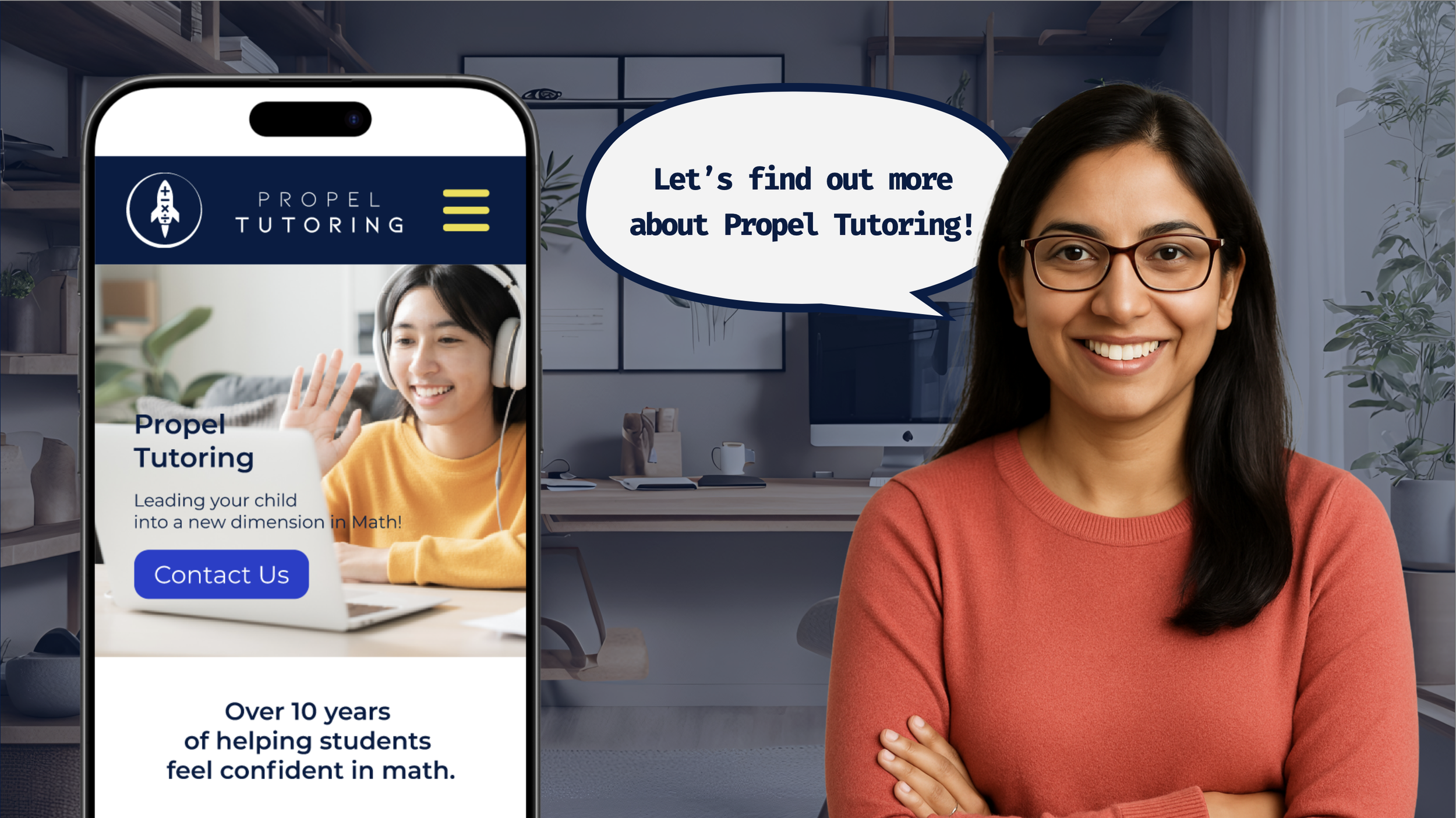
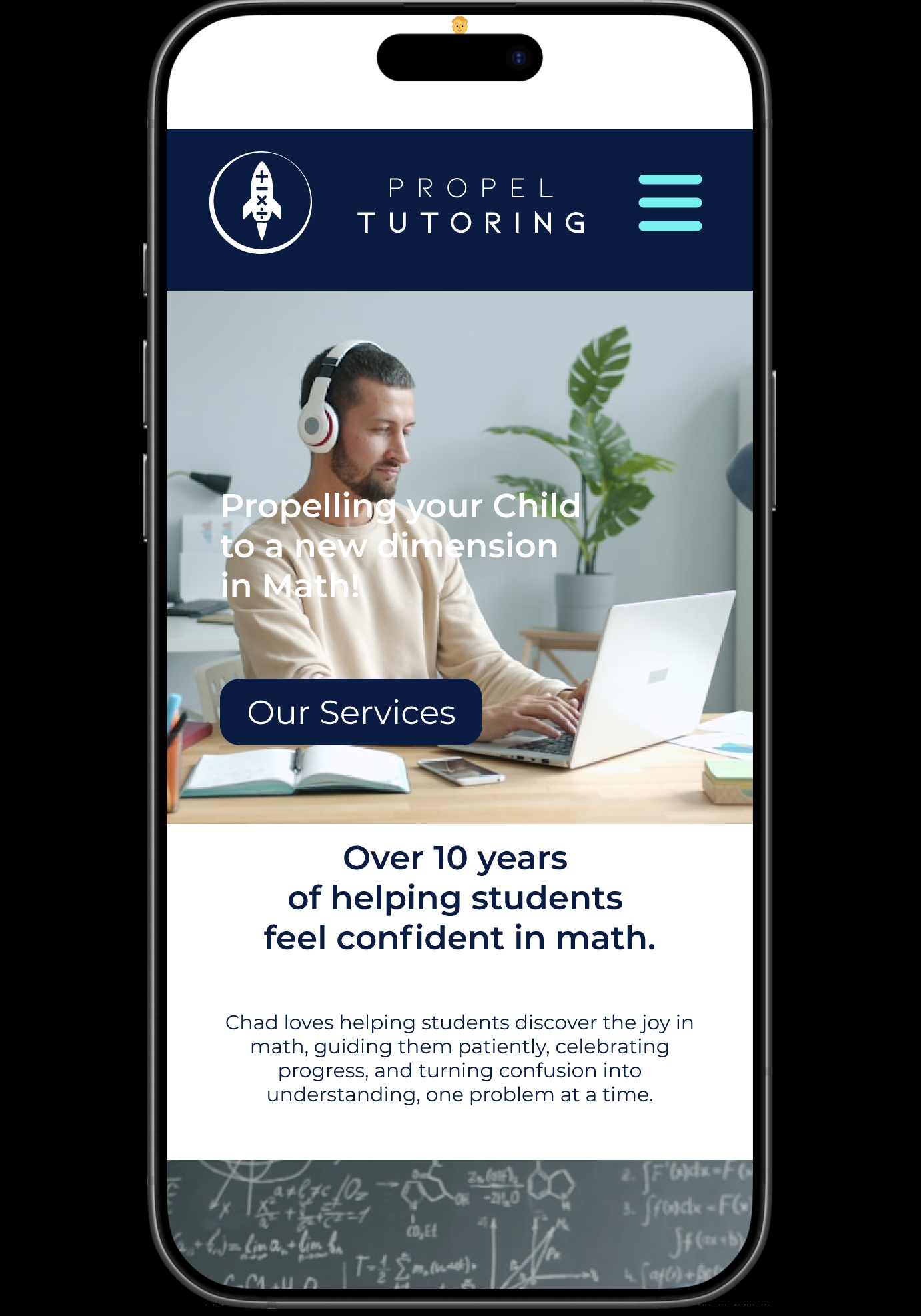
Propel Math Tutoring responsive website
Chad’s tutoring services do the online math tutoring this business aims to build a trustworthy online presence that highlights his expertise, credentials, and success stories while making it easy for parents and students to learn about services, book sessions, and make payments. He also plans to add progress-tracking and feedback tools to show measurable learning outcomes.
Year
2025
Client
Propel Tutoring
Goal:
As a UX designer, the goal of building a responsive website for Propel Math Tutoring is to create an intuitive and engaging platform that clearly communicates the tutoring services offered while ensuring a seamless experience across all devices. The website aims to build trust and credibility by showcasing the tutor’s credentials, experience, and success stories in a professional yet approachable way. It also focuses on simplifying the process for parents and students to explore services, schedule sessions, and reach out for inquiries with ease. By improving accessibility, usability, and overall user engagement, the design not only enhances the user experience but also supports the business objective of attracting and retaining clients through a clear, trustworthy, and user-friendly digital presence.
Challenges faced by Business:
The business currently faces limited visibility, relying mainly on word-of-mouth and school recommendations for new clients. Many parents are price-sensitive and need strong proof of value before committing to sessions.
Retaining students beyond short-term exam or homework help has also been inconsistent. Operational inefficiencies—such as manual scheduling, communication, and payments—slow down daily management. Moreover, being a single-tutor setup with limited time availability and an evolving brand identity adds further challenges to scaling and maintaining a professional yet personalized experience.
My Role:
As a Project manager & Lead UX Designer with the team, I conducted project plan, Client meetings, Statement of work, Work Agreements, C&C Analysis, Heuristic Evaluation, user interviews, created affinity mapping, user persona, problem statement, solution statement, usability testing report, designing task flow, sketches, Lofi prototyping, Hifi prototyping.
Project plan:

My project kick off:
After understanding business goals of “chad” of propel tutoring and the expectations and the timeline, i started working on creating a road map of how we can achieve the business goals in the 6 weeks of time line

Design Process:
I used “Double diamond Design process” to achieve business goals of this project is to design and build a web solution for our client, a math tutor, that provides clear visibility into who he is and the services he offers. The platform should enable potential clients to learn about his expertise, easily get in touch, view available sessions, book appointments, and eventually make payments online.

Discover Phase:
I decided to begin the user interviews based on the questionnaire developed after our client interview. This approach not only helped validate our business assumptions and hypotheses but also provided deeper insights into users’ needs, expectations, and behaviors.

Competitive and Comparitative analysis:
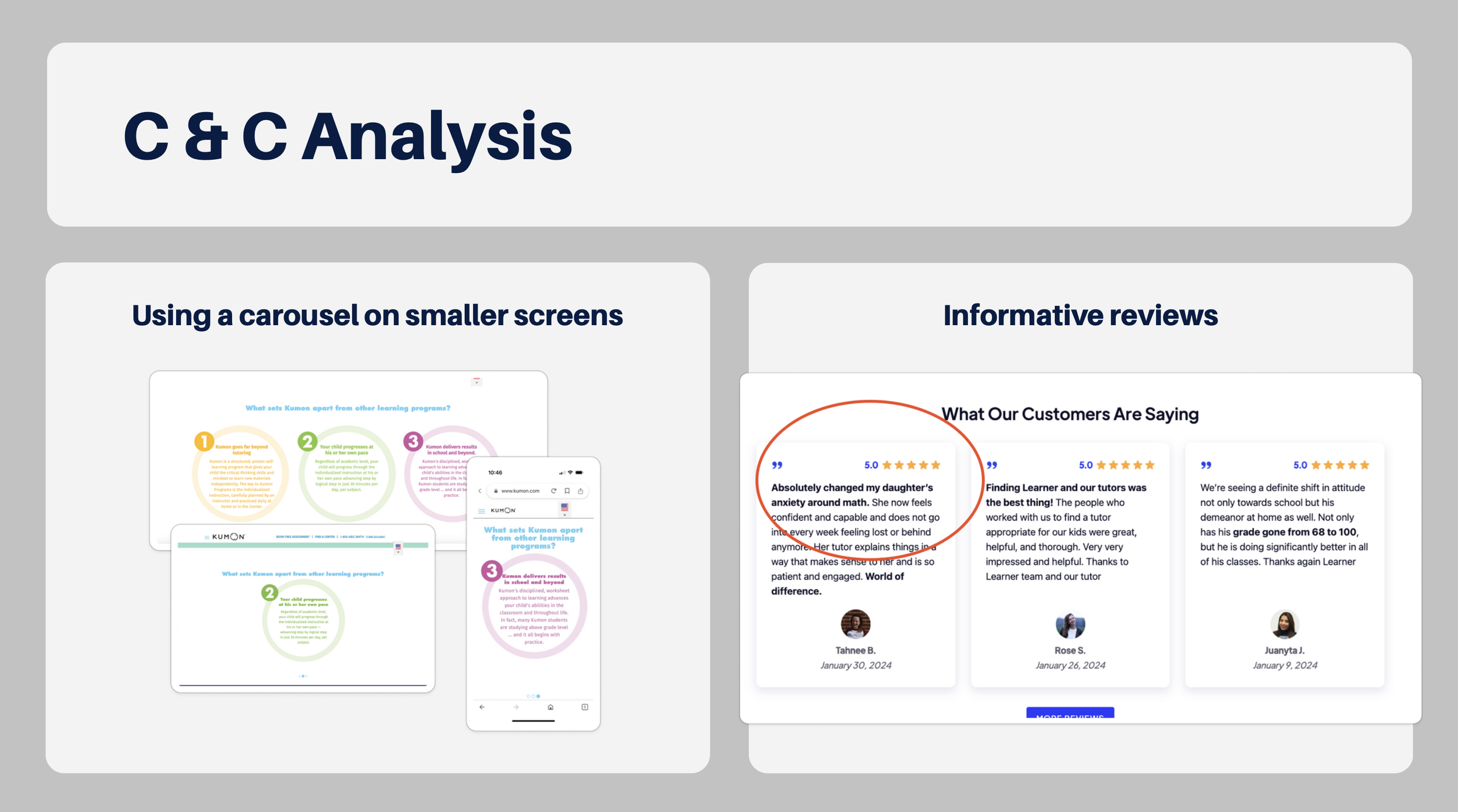
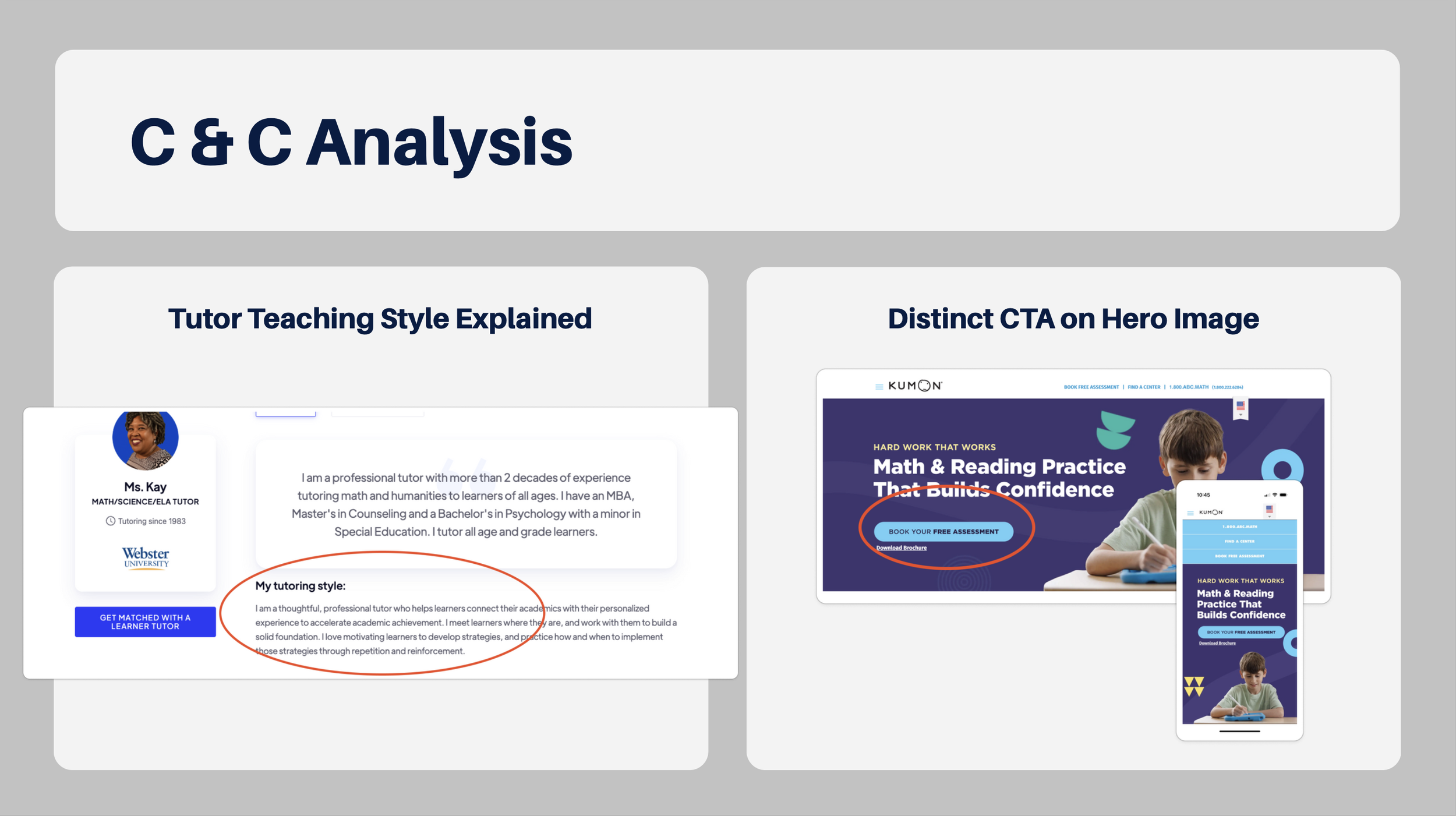
I conducted a Competitive and Comparative (C&C) analysis to review both direct and indirect competitors’ websites and better understand the market landscape.
User persona :
Synthesis: Based on the user interviews and analysis, I created a user persona named Proactive Prisha to gain a deeper understanding of the target users—their goals, motivations, frustrations, and pain points.
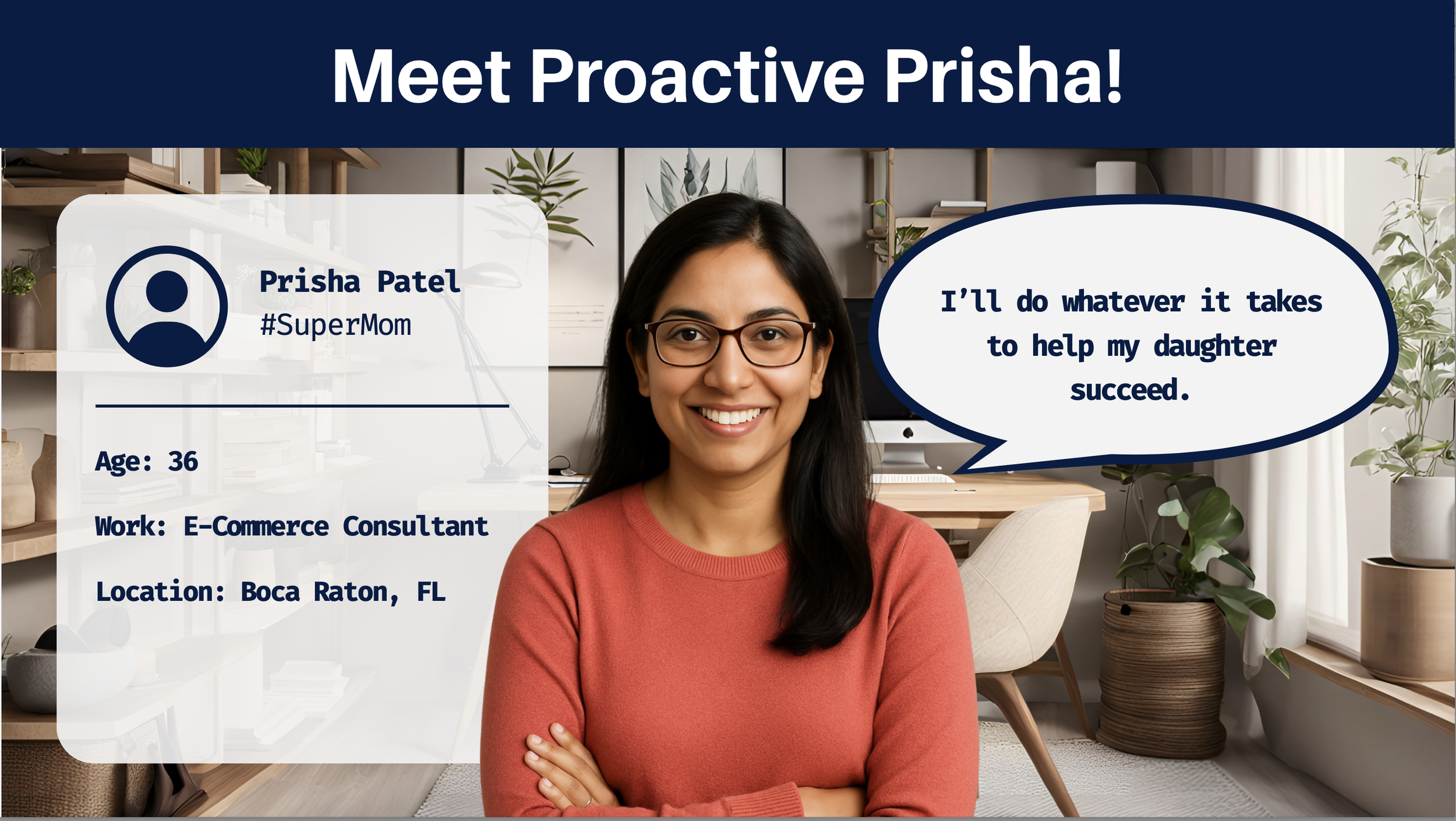
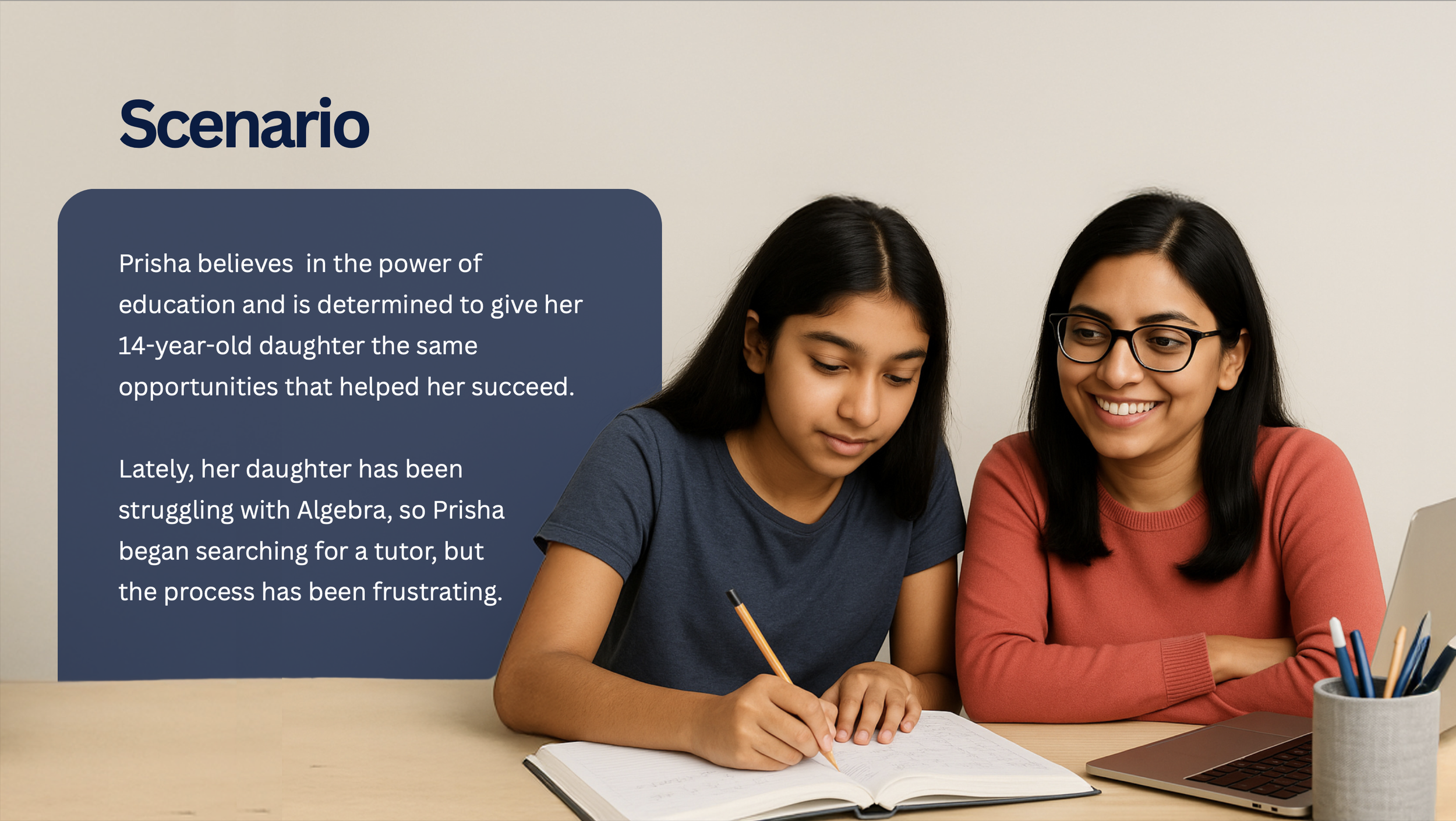
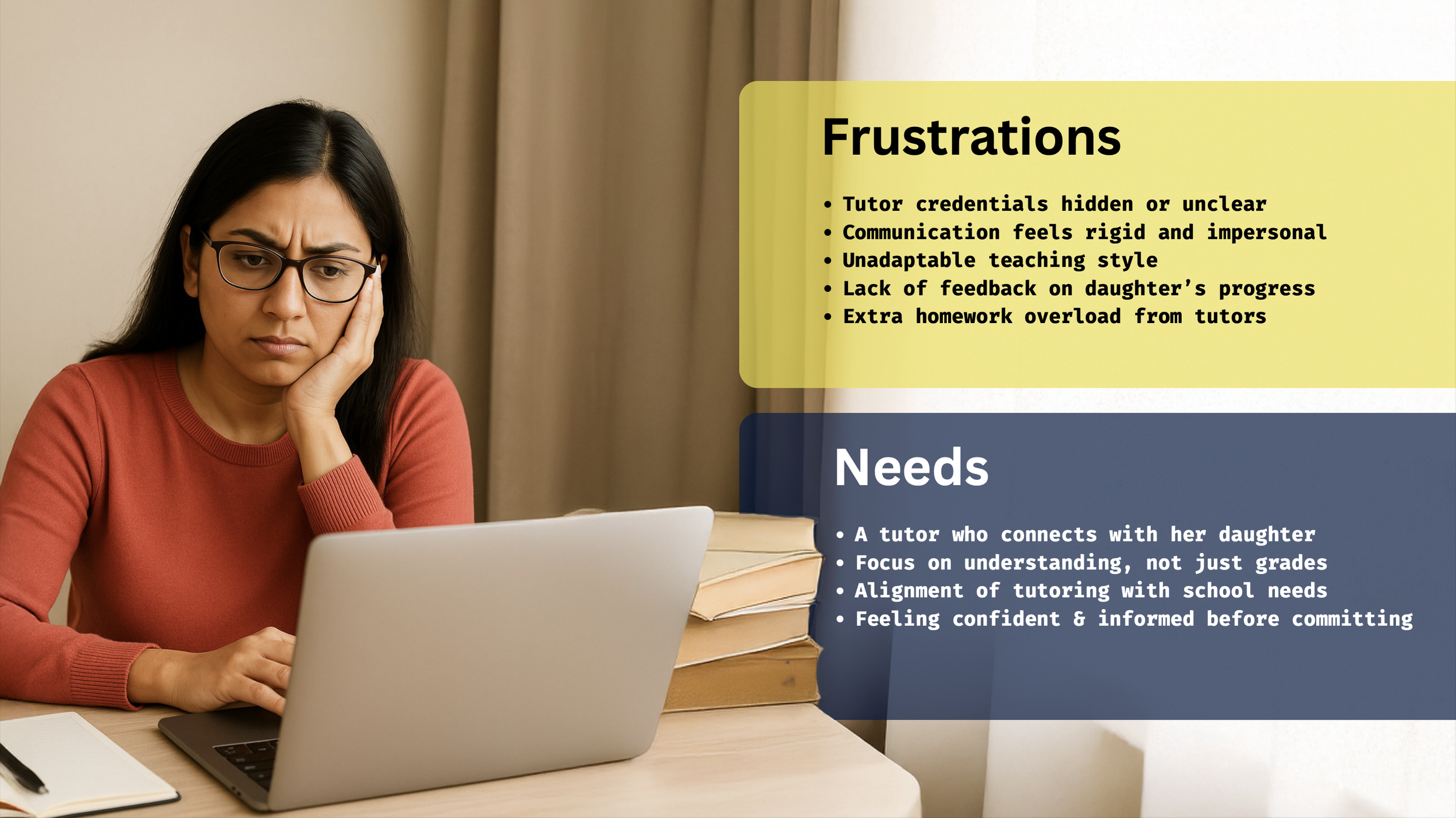
After conducting user interviews and developing user personas to better understand user needs, we identified a clear problem statement aimed at enhancing user engagement within the app.
Problem Statement:
Parents feel that tutors are an essential part of managing their child’s workload, preventing stress and making sure child is learning and understanding at a healthy pace. Parents are seeking tutors who combine subject expertise and credentials with strong interpersonal skills—patience, empathy, and adaptable teaching methods that build confidence, motivation, and authentic interest of the subject matter for their child, in addition to meeting classroom needs and grades.
Parents need a better way to search and feel informed about the tutors they find online because currently the experience lacks rich information about the tutors such as their credentials, teaching style, subject strengths, and validations of their quality via previous clients. Moreover, parents prefer direct communication about the child’s work and progress through familiar tools like email and text.
2. Define Phase:
After understanding the users’ problems, I facilitated a “How Might We” (HMW) workshop, encouraging my teammates to brainstorm, present, and discuss potential solutions to the challenges identified during our research
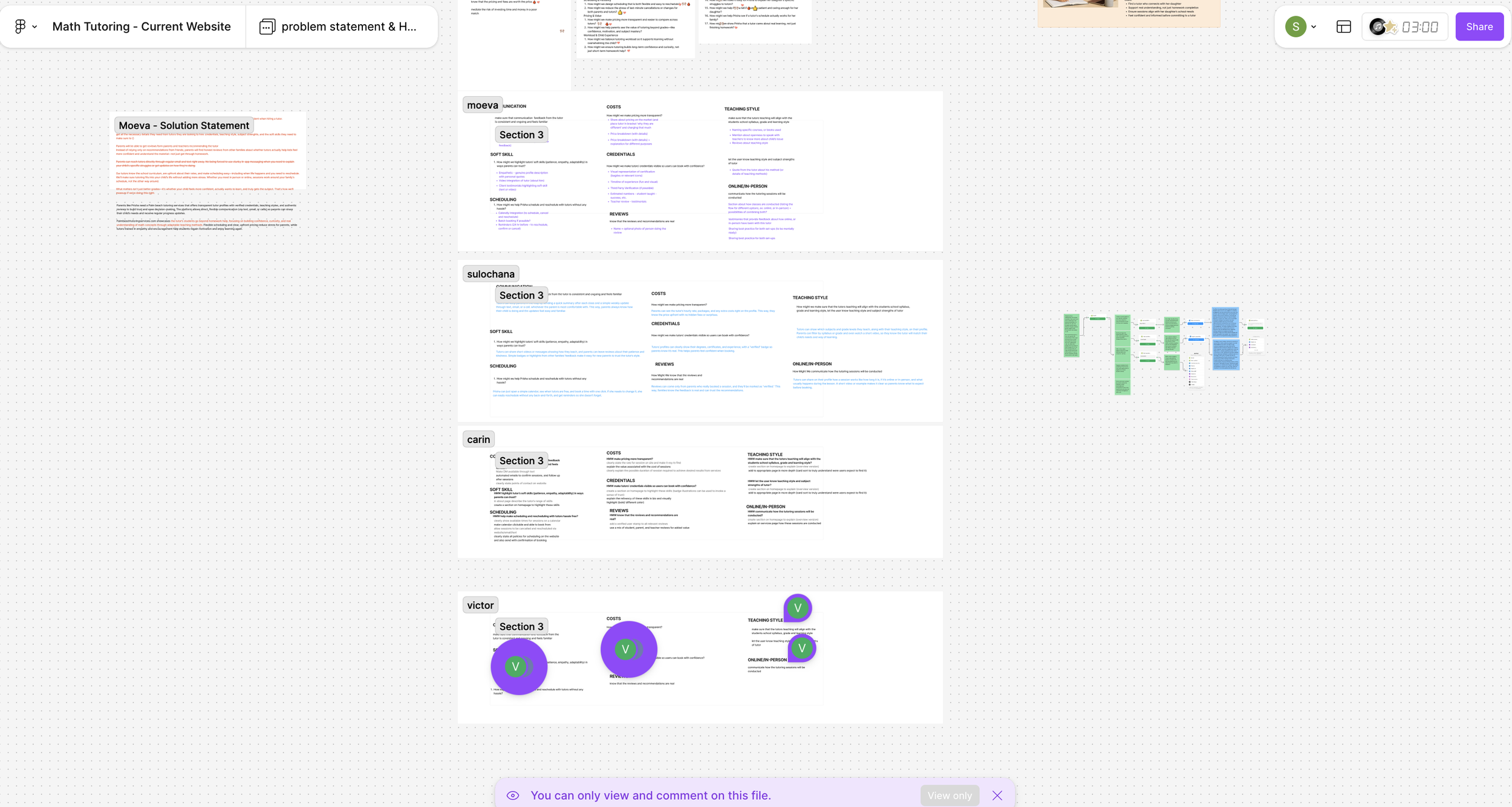
My teammates and I collaborated to generate multiple ideas and structure them into well-defined HMW statements.
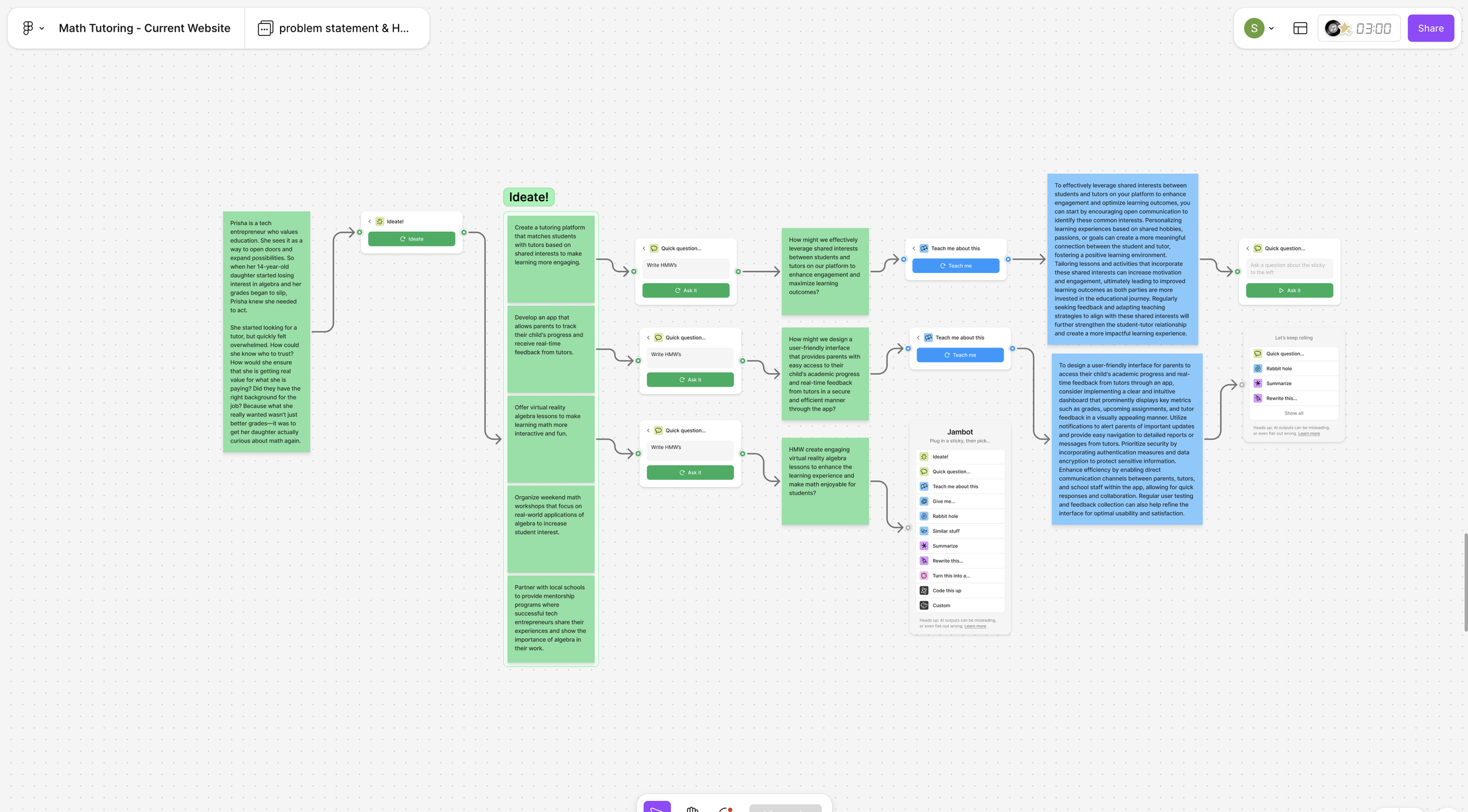
After discussing all the ideas, we critically evaluated each one and agreed on the final three concepts that we believed would deliver the most value.
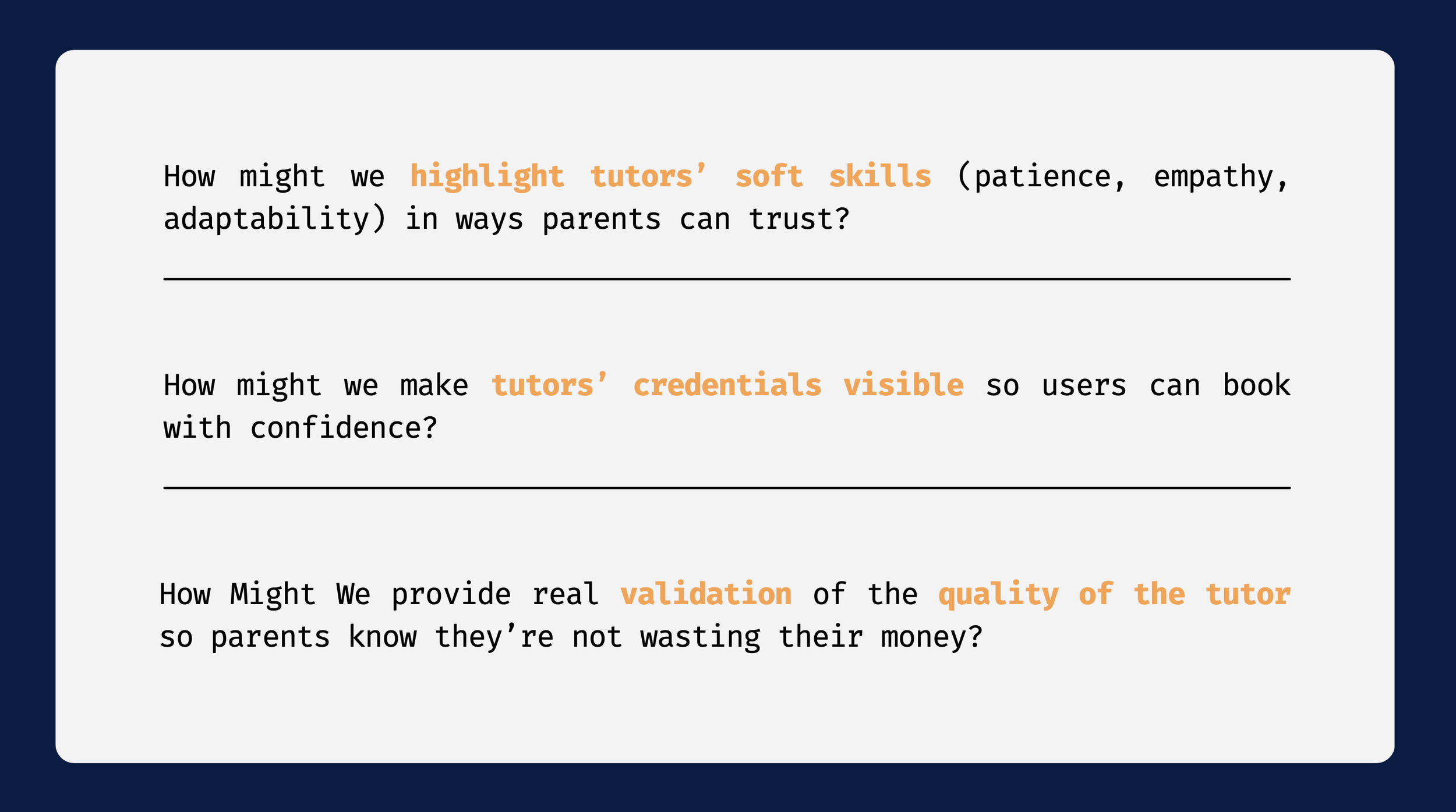
Solution Statement:
Propel Tutoring’s website is a platform where parents can find all the necessary information they need to feel confident when hiring a tutor. The website highlights tutors’ qualifications, teaching style, interpersonal skills, and the subjects and grade levels where they excel. Propel Tutoring features genuine reviews from parents and teachers.
The platform makes it easy for parents to communicate with tutors directly through familiar tools like email or text, so they can stay updated on their child’s work and progress. The website emphasizes what matters most: children feeling confident, motivated, and supported in their learning, and connects parents with tutors who share these values.
Design & Deliver:
Task Flow:
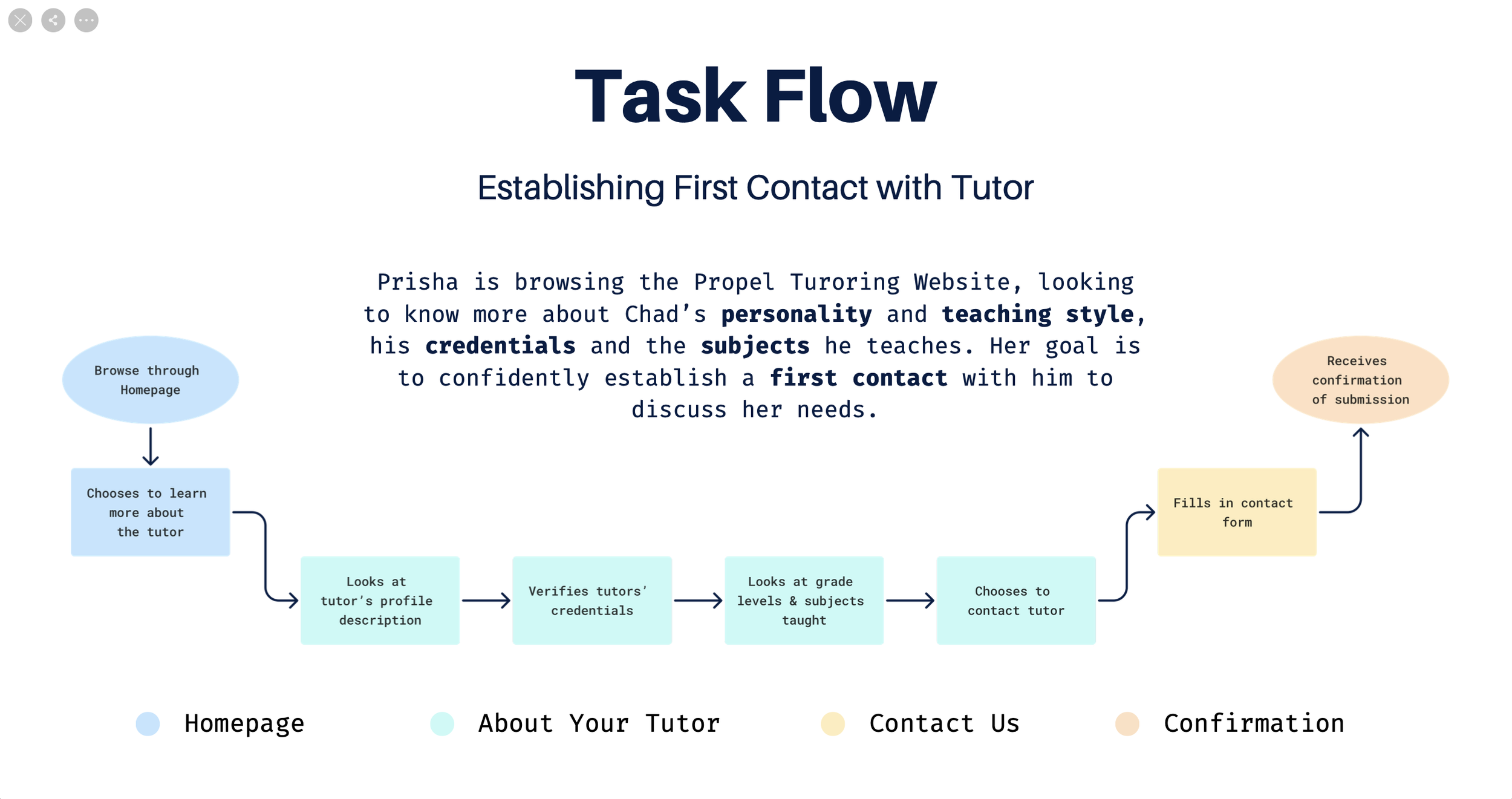
Then I began designing the task flows and created the initial sketches using Procreate to visualize the user journey and interaction flow.
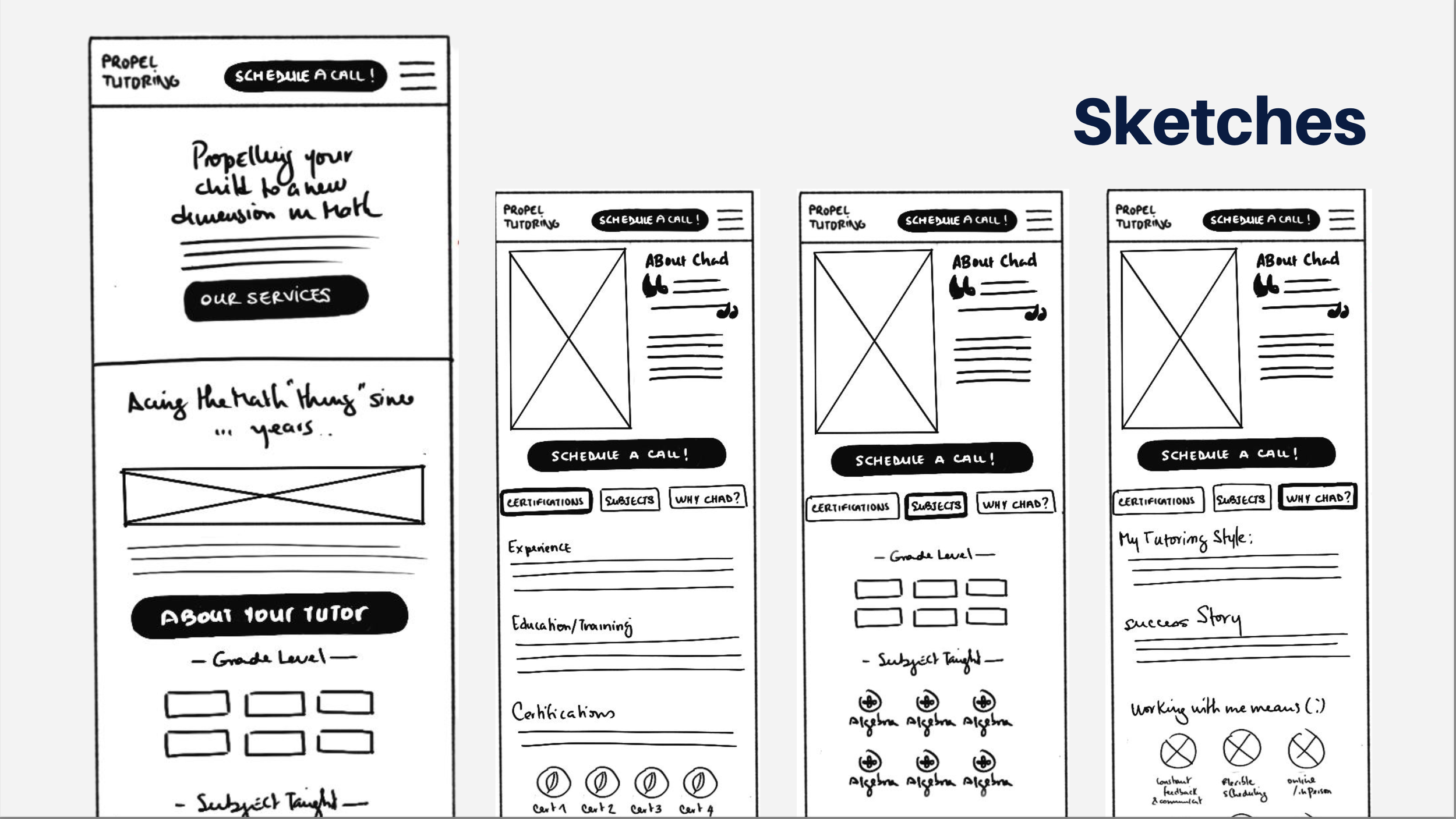
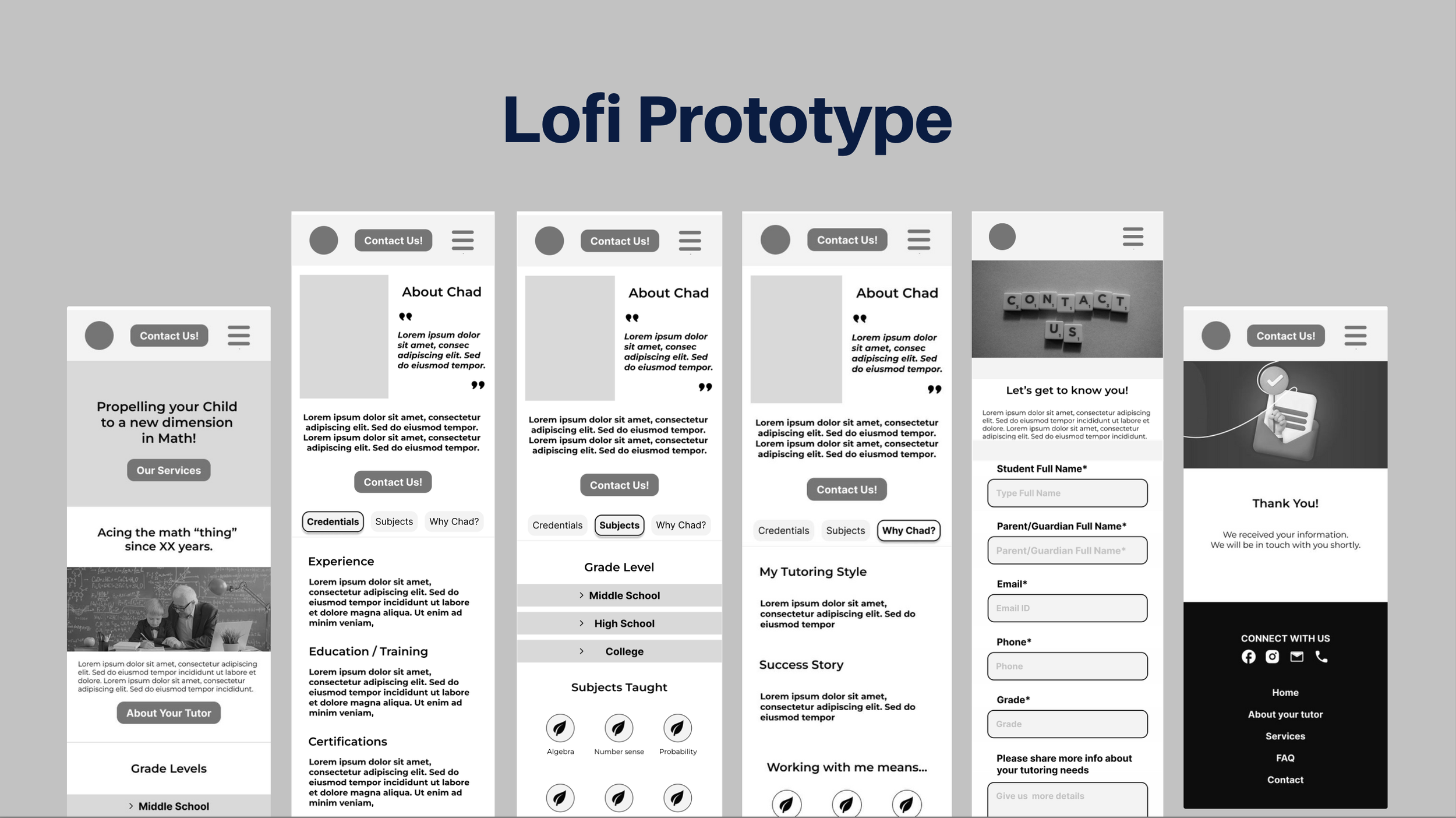
Once we finalized the design for each screen in our user flow, I began developing the low-fidelity prototype to visualize how the user interactions would function across the experience.
Lo Fi Prototyping:
After completing the prototype, we conducted usability testing with four participants. During the testing, we identified several pain points, and based on these insights, we refined the design to address those issues and make the user flow more intuitive and seamless.
Usability Testing Report:
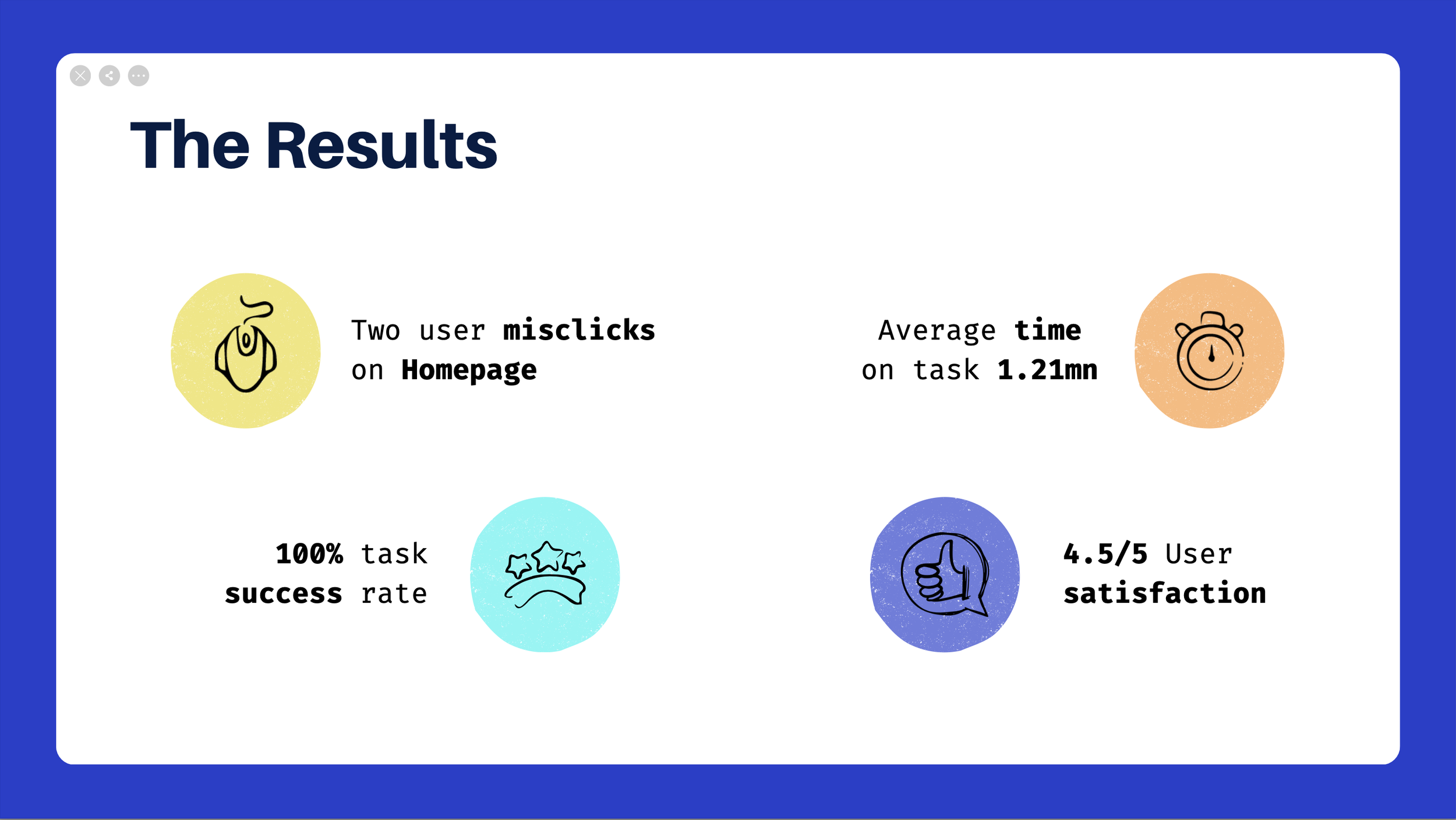
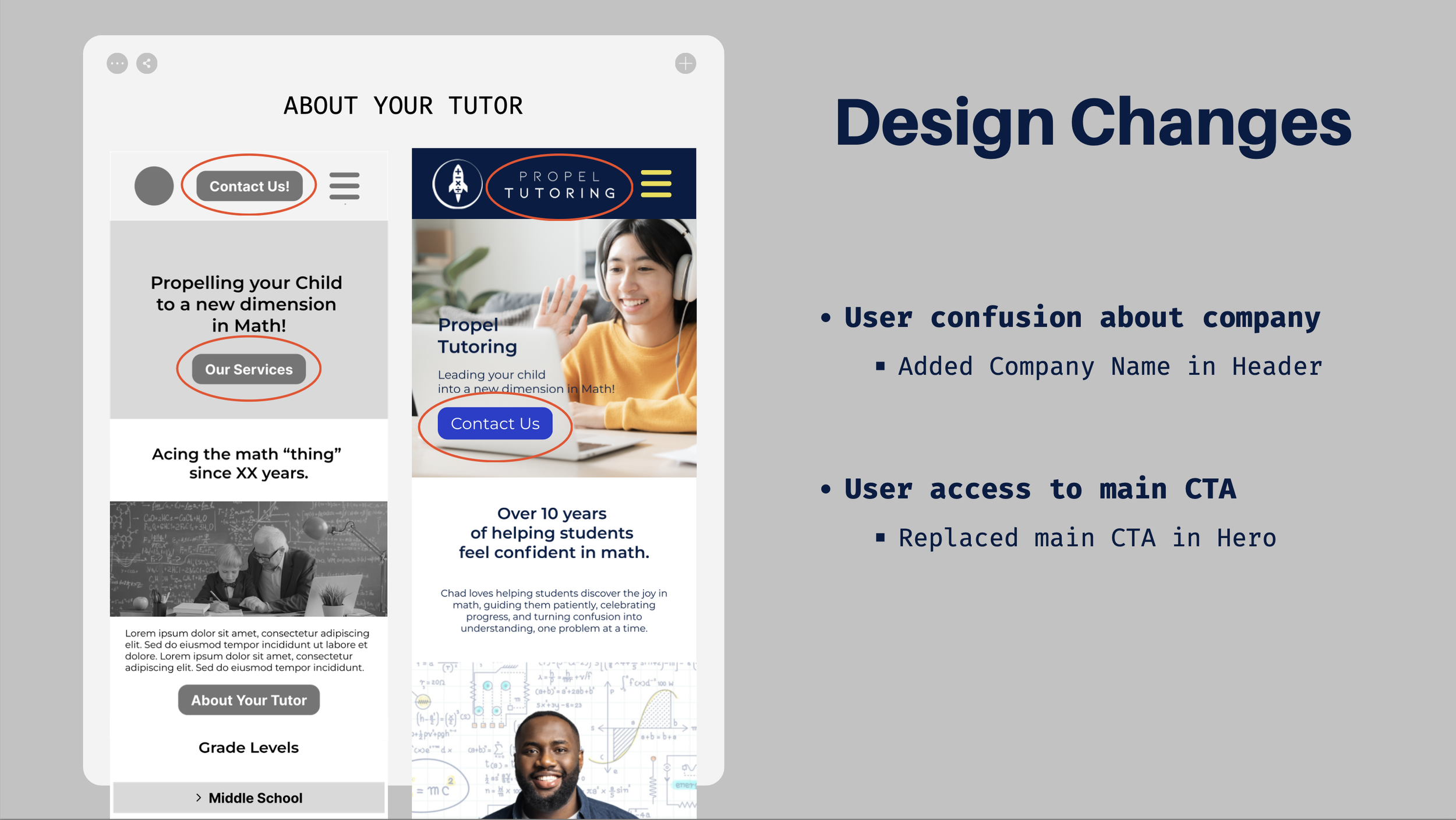
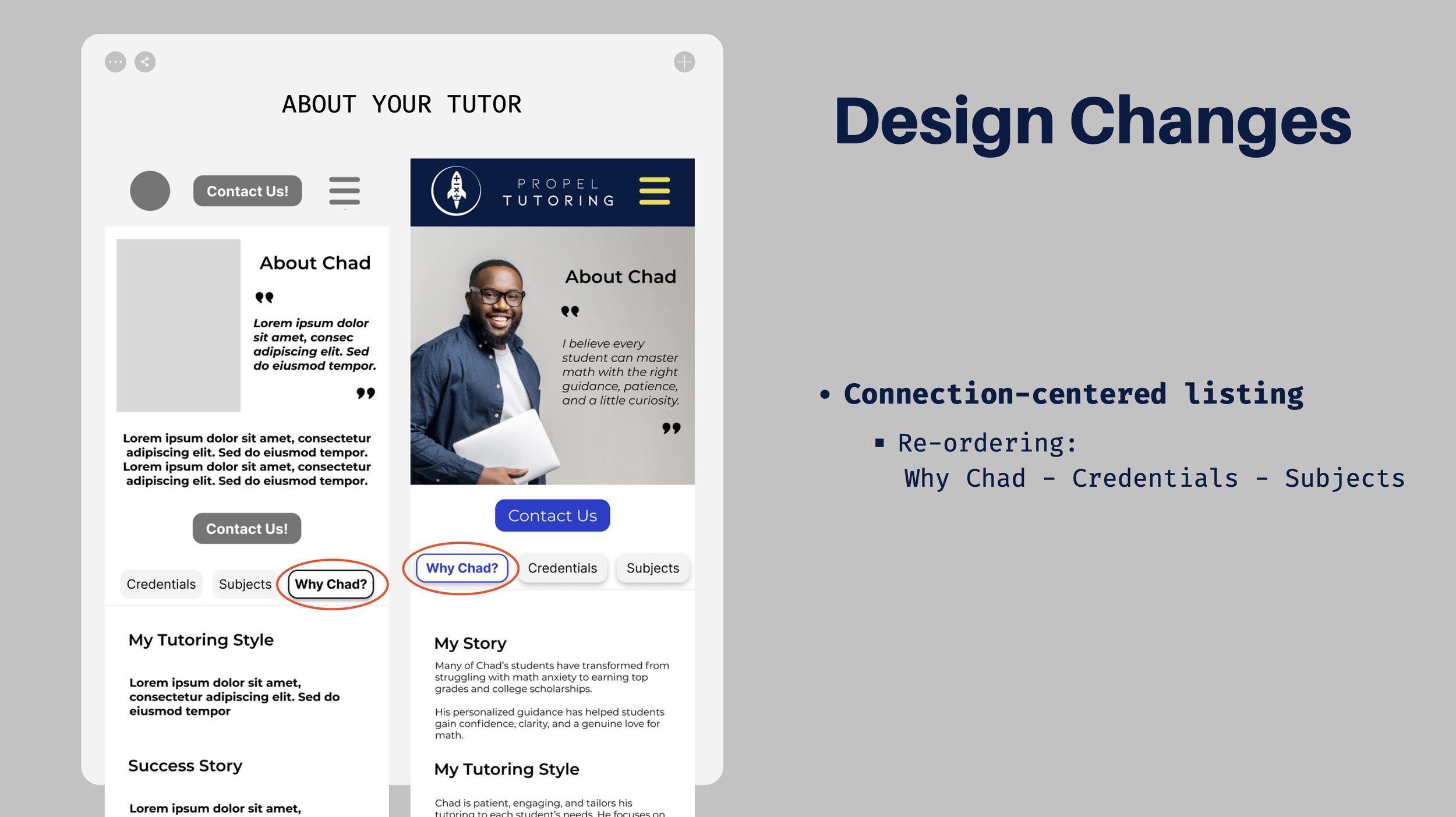
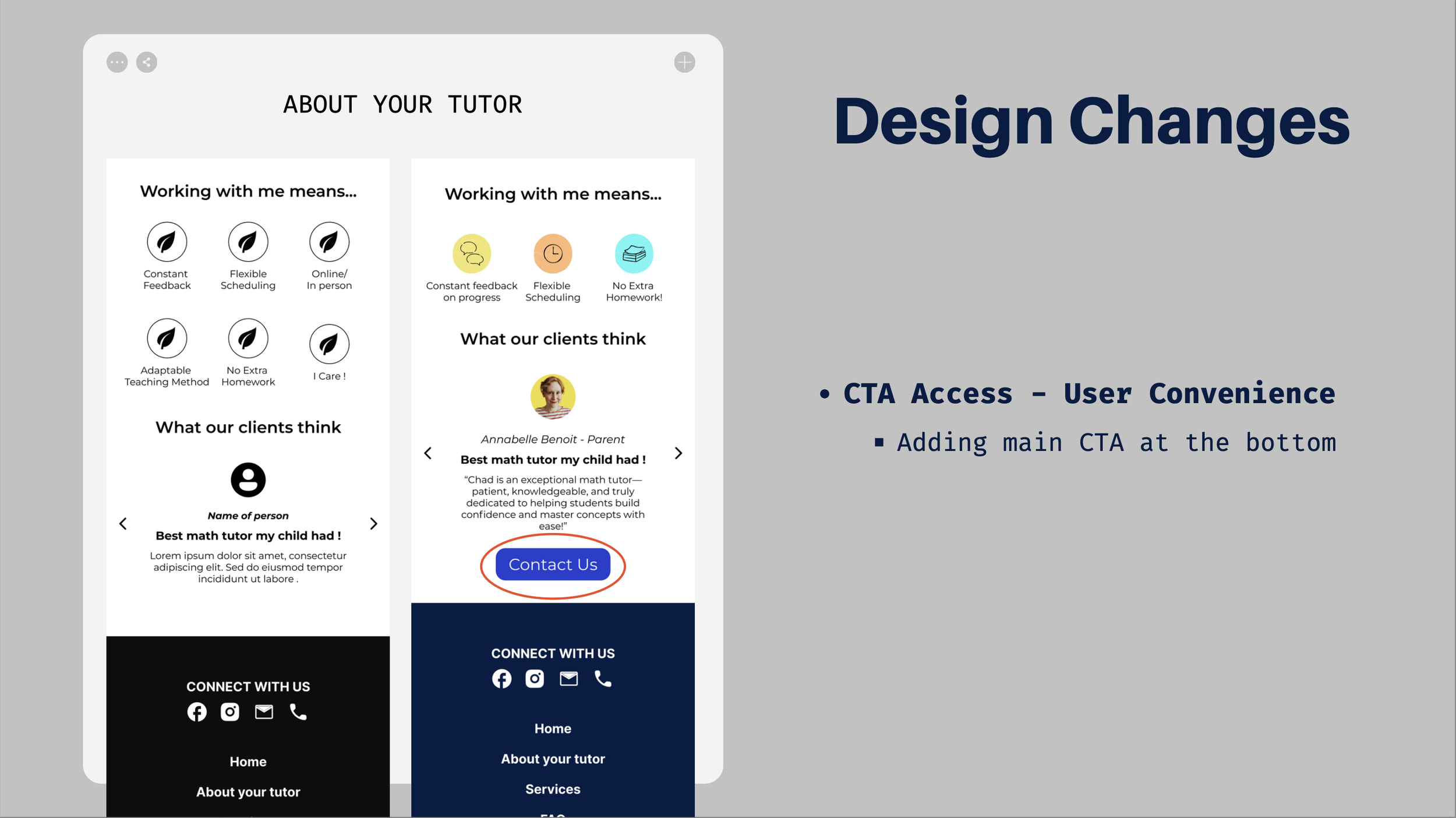
We conducted both attitudinal and behavioral testing during our usability sessions, using a moderated testing approach to interview participants and gather meaningful insights. After analyzing the feedback, we refined and revised the user flow to improve the overall usability and user experience.
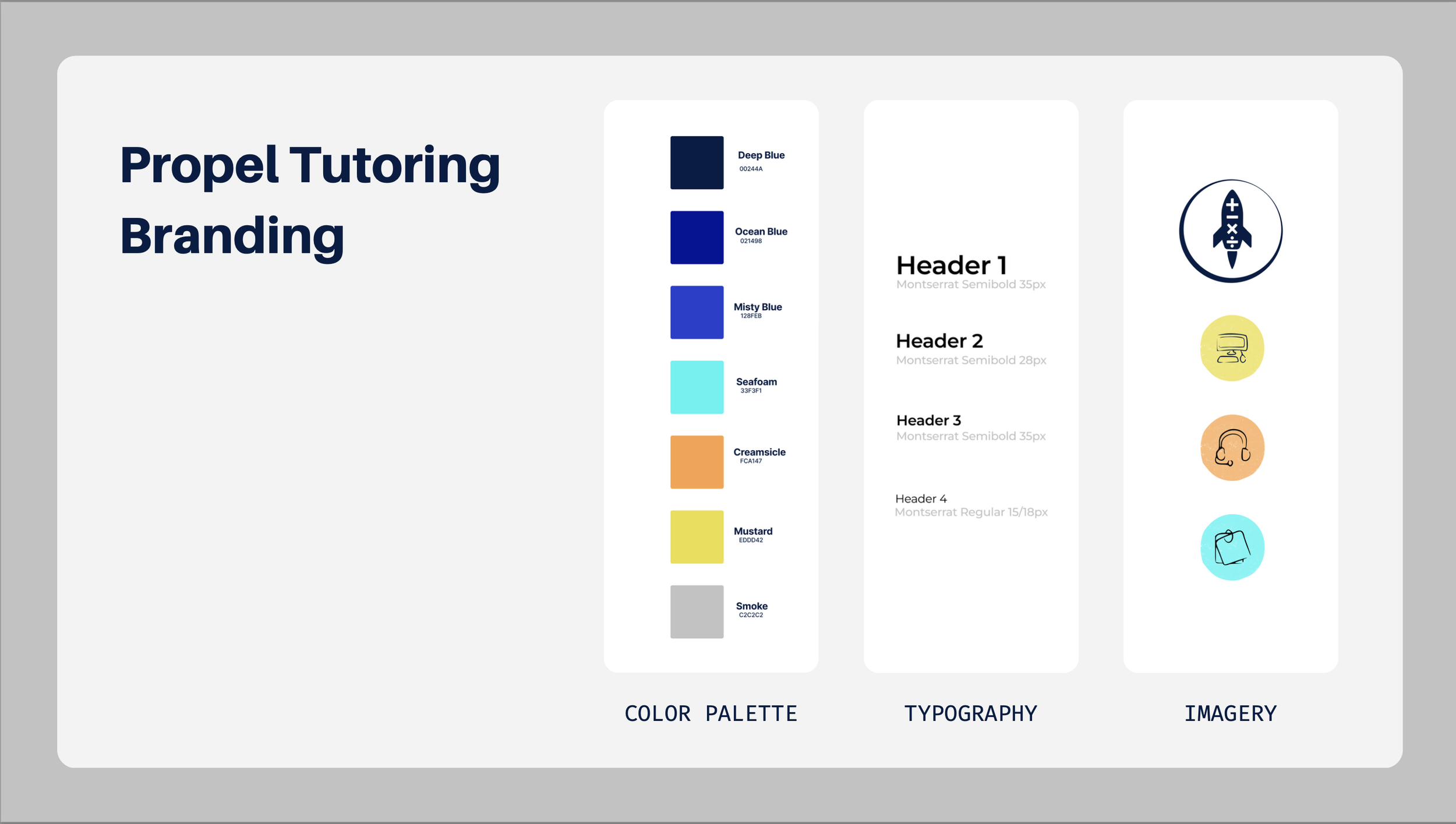
Style guide:
Hi Fi Prototyping:
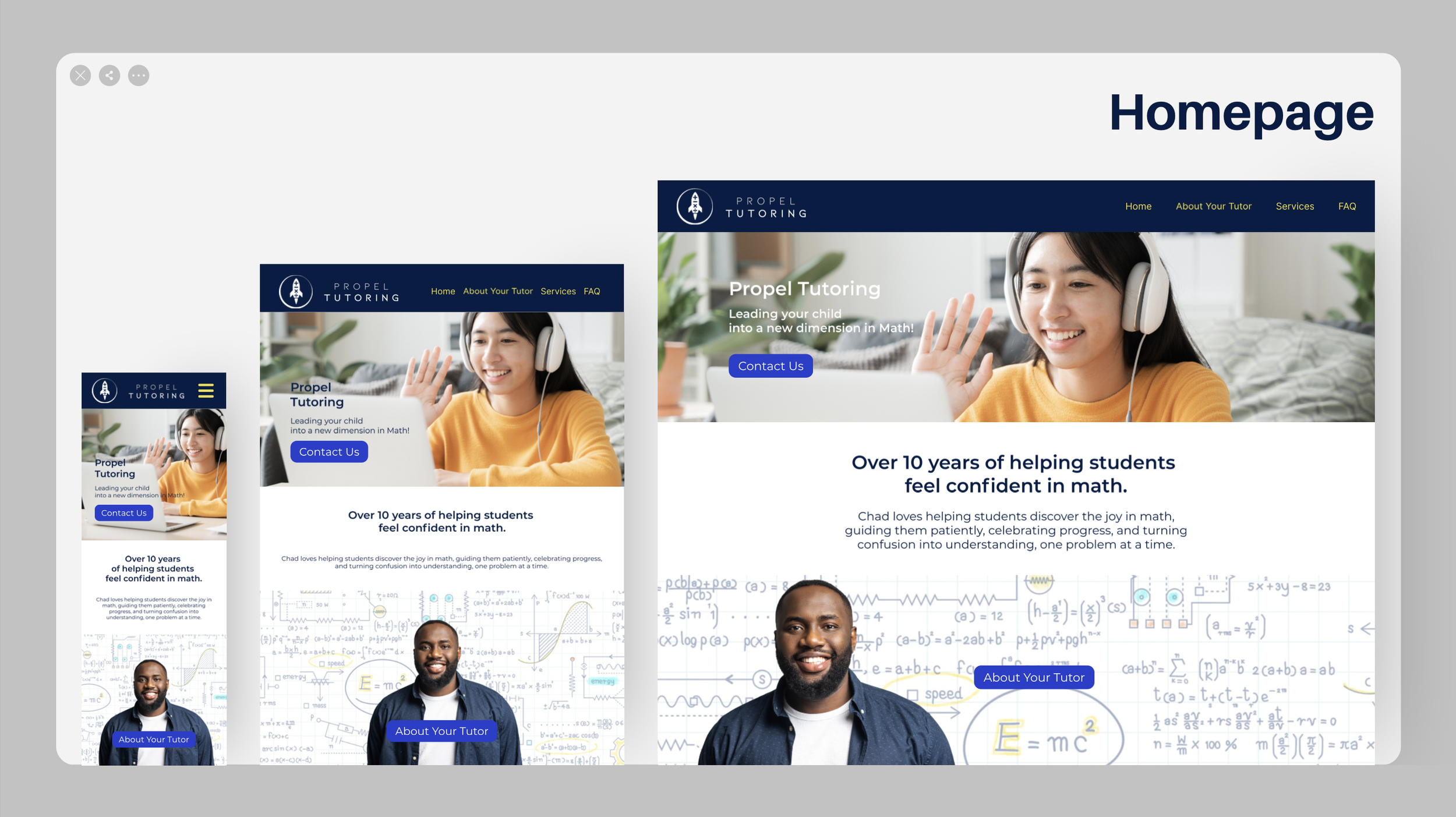
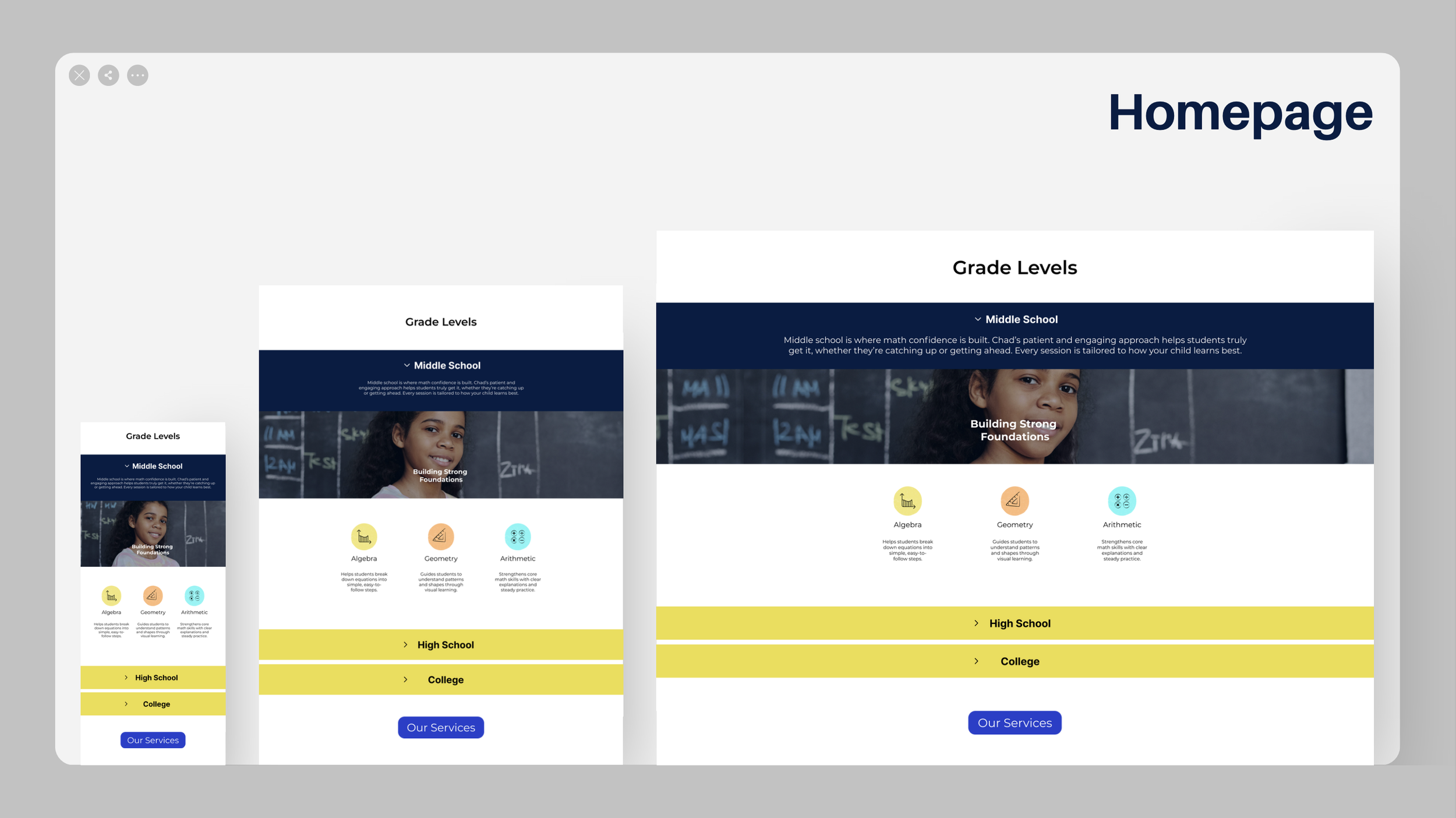
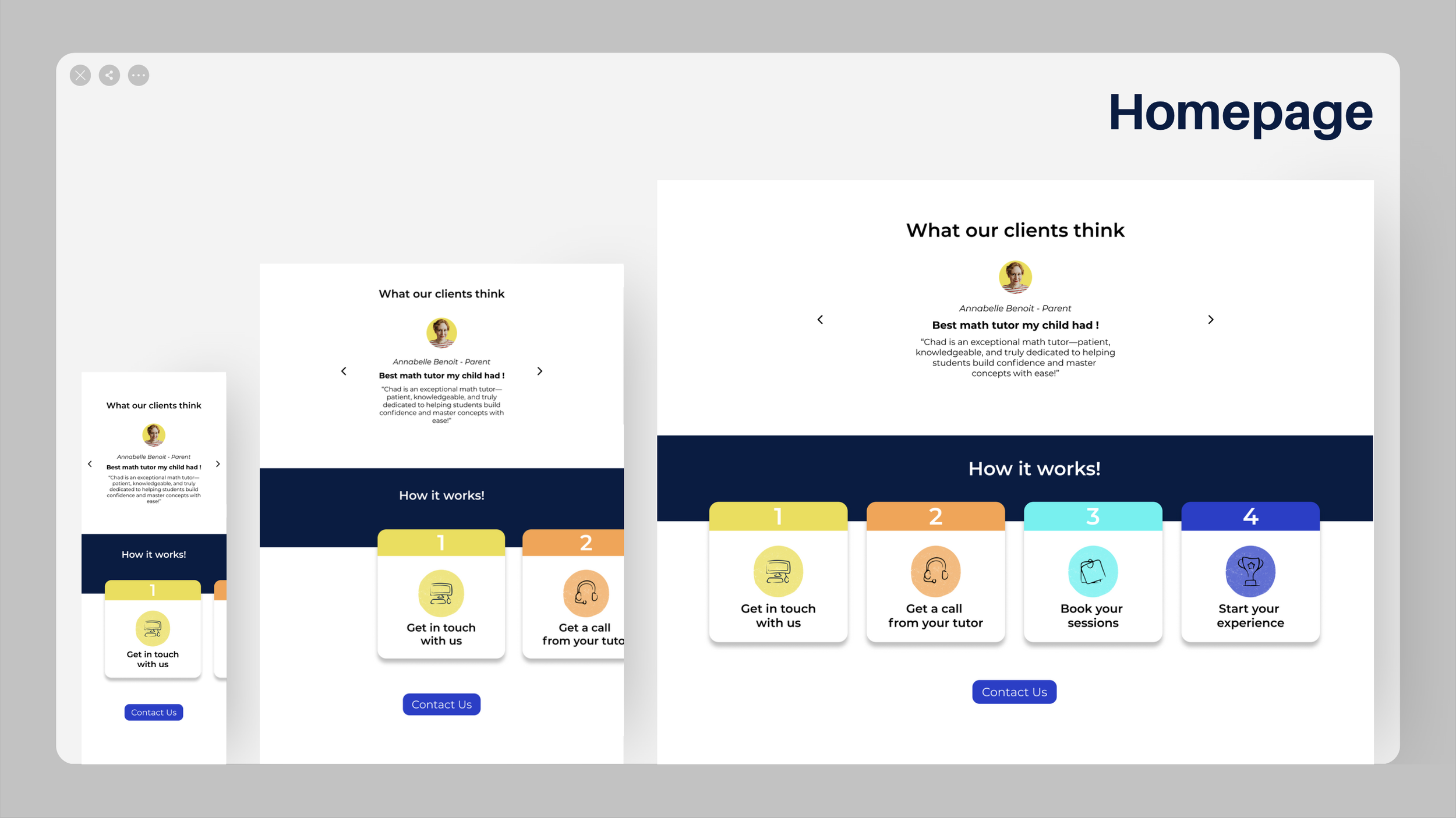
After completing the iterations based on usability testing feedback, we focused on refining the final look and feel of the prototype and enhancing the overall design solution.
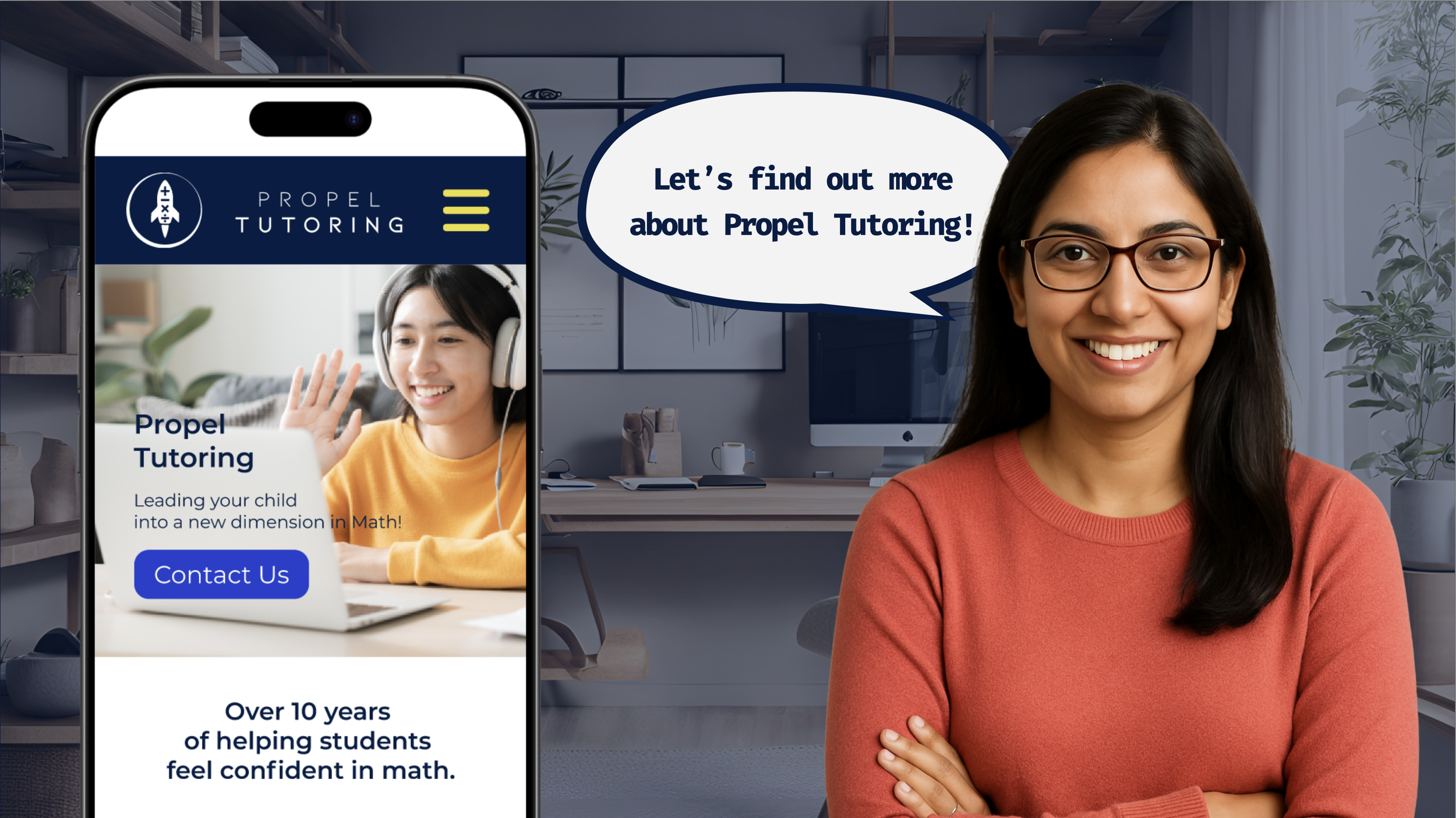
Scenario: Our user needs to find out about Chad's credentials, subjects and why chad, and fill out a contact form and get the confirmation to email.
Responsive web design: